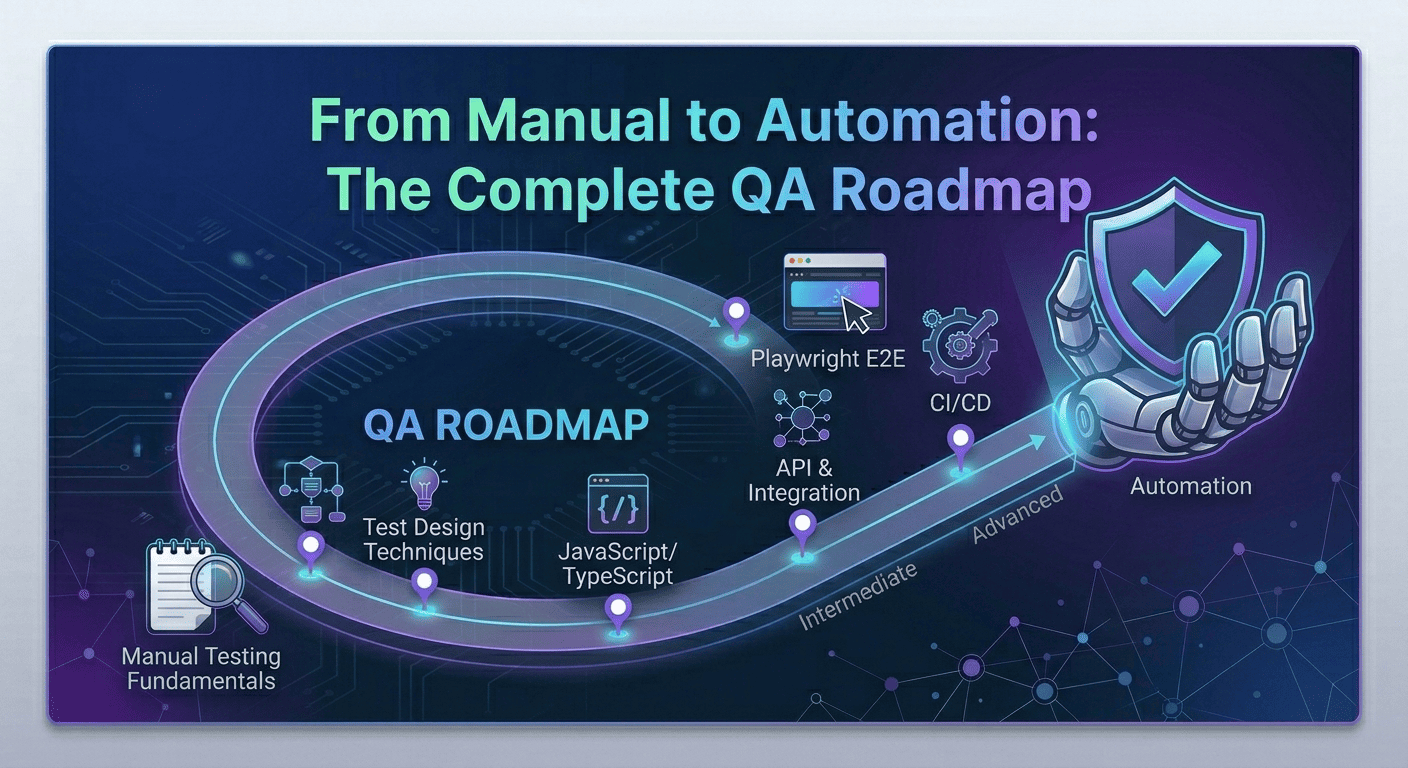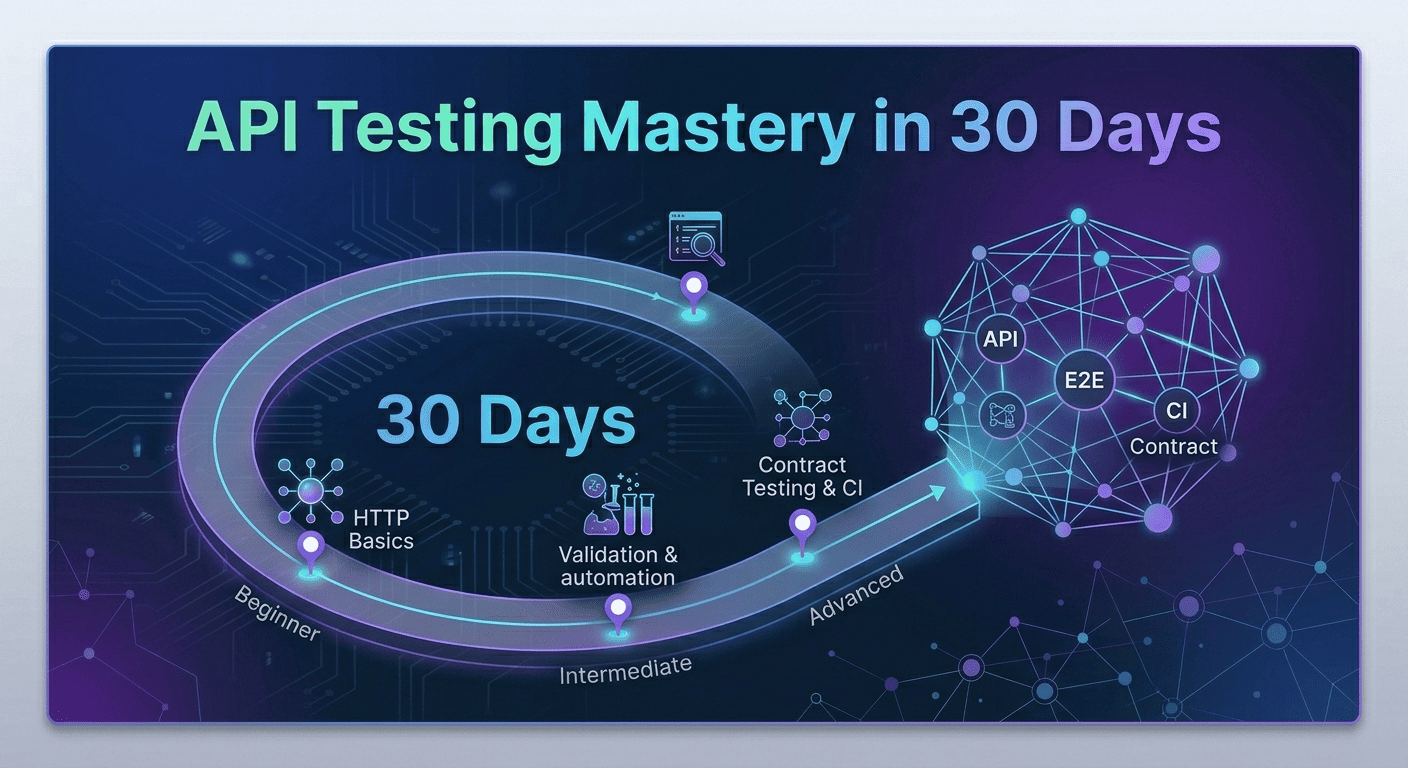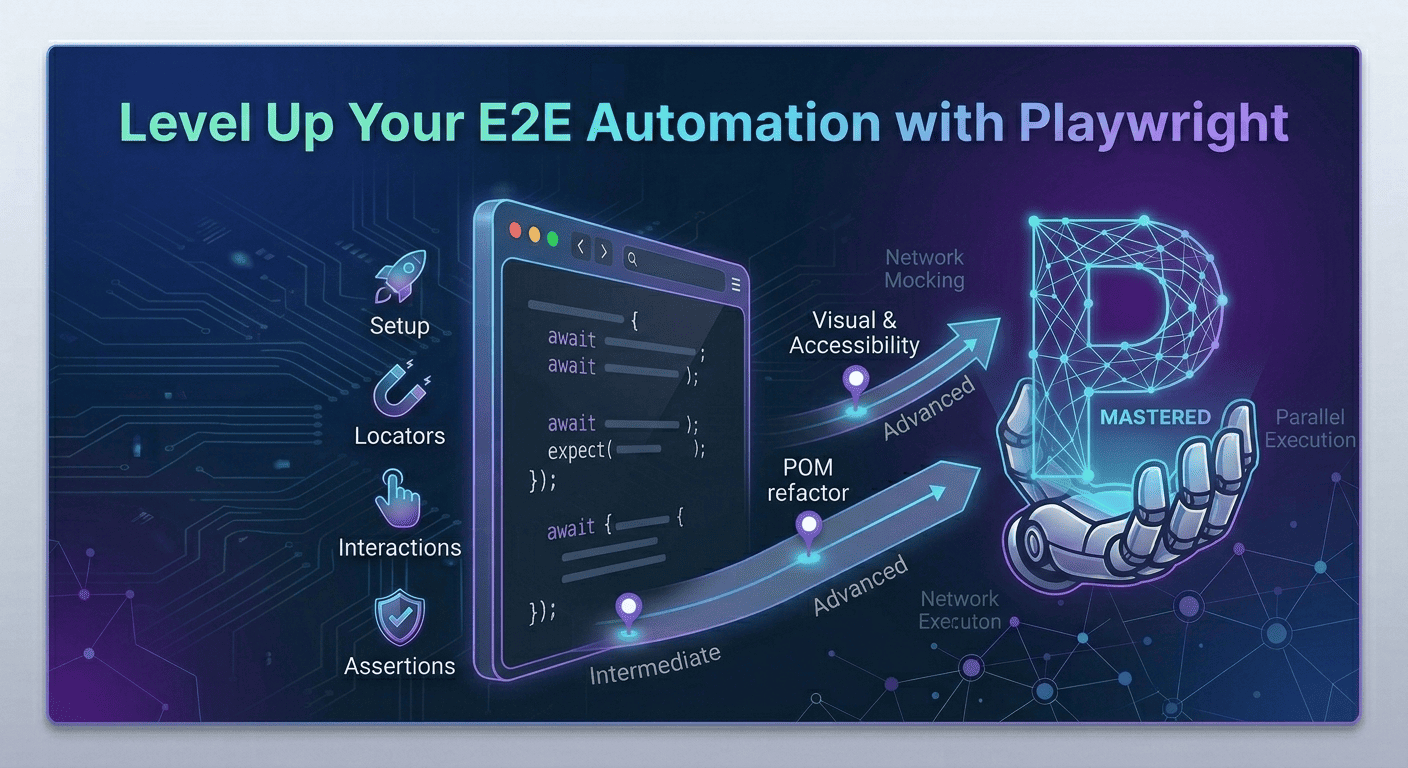
Playwright has quickly become the default choice for reliable end-to-end test automation — but most teams still aren't getting the full value out of it. This 30-day plan takes you from "green on my laptop" to a maintainable E2E suite that earns trust in CI: fast, stable, and readable enough that a new teammate can contribute in days.
Who This Is For
- QA engineers and SDETs building their first serious Playwright suite.
- Testers migrating from Selenium or Cypress who want to avoid old habits.
- Teams tired of brittle, slow, unclear E2E tests that no one trusts.
Week 1 — Beginner Fundamentals
- Installing Playwright and understanding the project structure it generates.
- Writing your first test and running it with the built-in test runner.
- Using the VS Code extension to record, debug, and step through tests.
- Basic element locators and interactions — clicks, fills, navigation.
- A gentle intro to assertions, waits, and Playwright's auto-waiting behaviour.
End-of-week goal: automate a simple login flow on a sample app, commit it to a repo, and run it from the command line without a babysitter.
Week 2 — Locators & Stability
- Role-based and text-based locators — the resilient first choice for most elements.
- CSS and XPath kept to a minimum, used only where nothing else fits.
- Filters and selector chaining for targeting elements inside complex layouts.
- Identifying and eliminating flaky selector patterns.
- Auto-waiting vs explicit wait strategies — when each makes sense.
- Handling dynamic UIs, loading states, and AJAX-heavy pages.
Week 3 — Intermediate Architecture & Scale
- Refactoring into the Page Object Model without going overboard on abstraction.
- Fixtures and hooks for setup, teardown, and shared context.
- Data-driven tests — one spec, many permutations.
- Hybrid flows that combine API calls with UI verification (faster & more robust).
- Parallel workers, sharding, and running the suite across machines.
- Retry logic and fail-fast tuning to keep signal high in CI.
Week 4 — Advanced & Production Features
- Visual regression and accessibility checks integrated into the flow.
- Network interception and mocking — stubbing flaky third-party APIs to stabilise tests.
- Cross-browser and mobile-viewport testing.
- Performance tracing and surfacing regressions before users notice.
- Cloud execution platforms when local and CI aren't enough.
- CI/CD optimisation: caching, parallel shards, and flakiness dashboards.
Outcome
After 30 days you'll have a Playwright suite you actually trust — running on every PR, catching real regressions, with smart reporting and observability. You'll have mastered trace viewer and debugging workflows, and put in place the patterns that make automation sustainable rather than a chore that breaks every sprint.
Accelerate With AI
Pair this roadmap with Snap2Bug for crisp bug reports when tests surface regressions, and TestCaseMate to generate the scenarios your Playwright specs should cover.