There’s a quiet tax on every release.
Nobody puts it on the burndown. It doesn’t show up as a ticket. It’s the afternoon you open a new feature story, stare at acceptance criteria that somehow say everything and nothing, and start typing:
Step 1: Navigate to…
Expected: Page loads successfully.
By the time you’ve covered login, empty states, and one unhappy path, the day is gone. The story still has three more flows. Regression for last sprint’s hotfix is waiting. And someone in standup asks if “testing is ready.”
I’ve been that person. Most of us have.
What actually slows you down
Writing cases isn’t hard because testers can’t write. It’s hard because good cases need:
- Coverage thinking — positive, negative, boundary, roles, empty data
- Structure — steps someone else can run next week without asking you
- Context — the module, the build, the environment
- Consistency — so Case #47 doesn’t look like it was written by a different person than Case #12
Spreadsheets and blank TMS forms don’t help with any of that. They just give you a place to type.
What I started doing instead
I stopped treating the first draft as sacred.
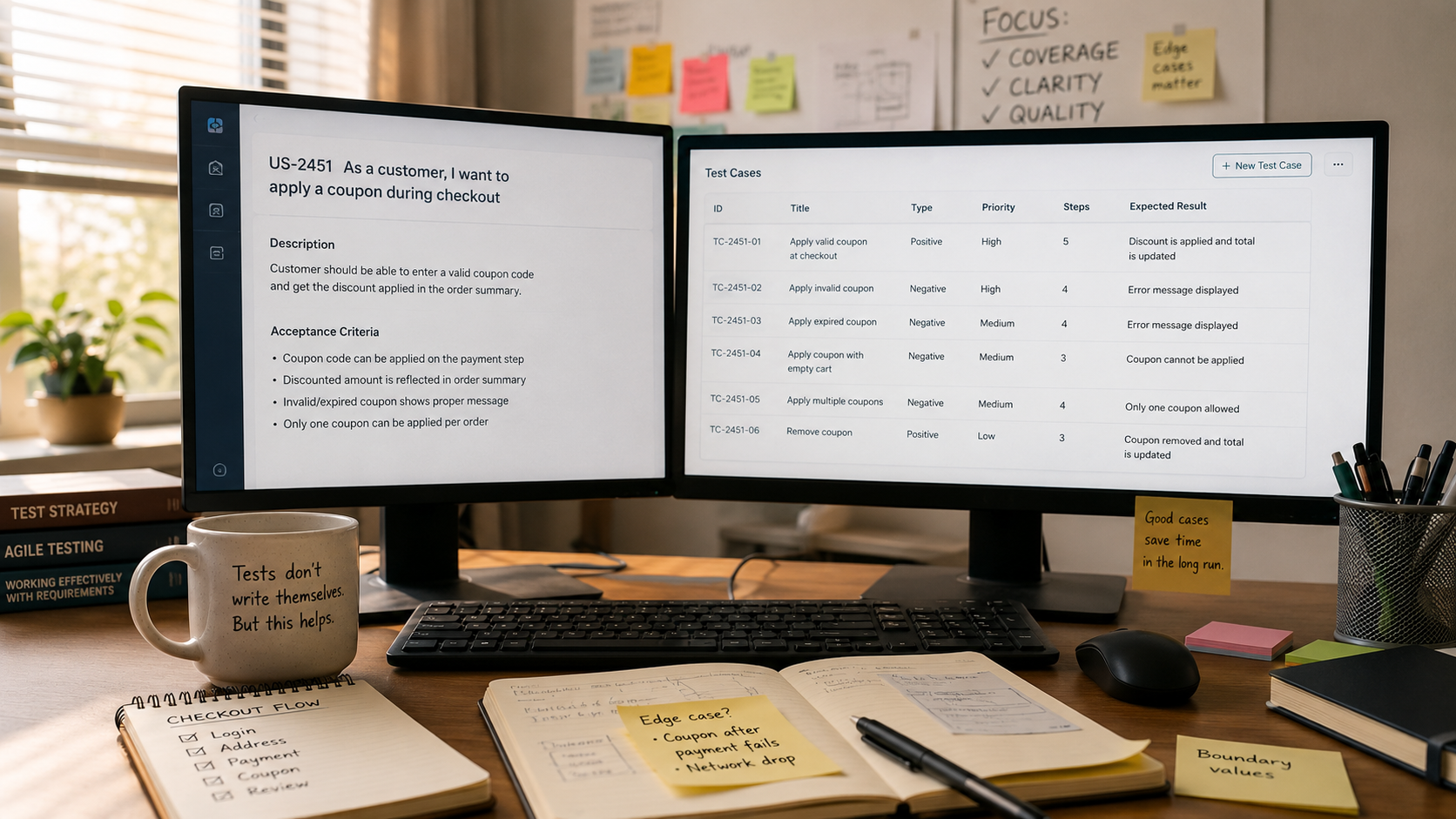
For a checkout change last quarter, I pasted the user story into TestCaseMate (it’s the QA workspace we built under AITesterBuddy.tools). I asked for functional cases first. Got a set with steps and expected results. Then I did what any decent tester does: deleted the fluff, tightened two steps that assumed a logged-in user when they shouldn’t, and added one case for “coupon applied after payment method fails.”
That last one? The AI didn’t invent it for me. The draft freed the hour I needed to think of it.
That’s the point people miss in the “AI writes tests” hype. You’re not outsourcing judgment. You’re skipping the blank-page tax.
A workflow that doesn’t embarrass you in review
If you try this on a real team, keep it boring and reviewable:
- Drop the story (or a short description) into generation
- Pick the types you actually need this sprint — don’t generate six categories “because you can”
- Review like you would a junior’s first draft
- Move keepers into the right project/module
- Build a suite for the run; leave the noise out
Free plan on TestCaseMate gives you 50 AI credits a month. One credit is roughly one generated case. Enough to try this on a real feature without a sales call.
What still needs a human
AI won’t know that your staging OTP is broken on Fridays. It won’t know that “Admin” in your org means something weird. It won’t catch that the Figma and the story disagree.
You will. That’s still the job.
The job just doesn’t have to start from an empty row in Excel.
Try it on one story this week — Free plan, 50 credits/month.
Open TestCaseMate →